Tokyo Car Meets and JDM Spotting Locations
Where Tokyo's car meets actually happen — Daikoku PA, Tatsumi PA, A-PIT Autobacs, Umihotaru, Odaiba and Hakone — plus which need a car and when to go.
Tokyo does not have one official nightly JDM car meet. The scene is spread across expressway parking areas, tuning stores, informal gatherings, organised events and weekend driving routes — which is why visitors searching for a single address so often end up disappointed.
The three names that come up most illustrate the problem neatly. The most famous location, Daikoku PA, is actually in Yokohama rather than Tokyo. Tatsumi PA genuinely is in Tokyo, but it is much smaller than its reputation suggests. And A-PIT Autobacs Shinonome is easy to reach by train, but it’s an automotive store rather than a guaranteed meet. Understanding those differences is the key to planning a good JDM evening instead of a frustrating one.
| Location | Best for | Reliability | Vehicle required? |
|---|---|---|---|
| Daikoku PA | Biggest informal JDM gathering | Very high on a good night | Yes |
| Tatsumi PA | Wangan and Tokyo expressway atmosphere | Low to moderate | Yes |
| A-PIT Autobacs Shinonome | Tuning culture and casual spotting | High as a destination | No |
| Umihotaru PA | Scenic Tokyo Bay stop | Low for meets | Yes |
| Odaiba | Opportunistic spotting and events | Variable | No |
| Shibuya / Roppongi | Random street spotting | Low | No |
| Hakone | Weekend driving culture | Variable | Car strongly recommended |
Tour prices and running days shift through the season, so it’s worth checking what’s actually available on your dates before you build an itinerary around any one of these.
Check Availability
Why Tokyo has no single car meet
There is no organiser, no venue and no calendar behind most of what people mean by “Tokyo car meets.” What exists instead is a set of places where enthusiasts have habitually ended up — mostly expressway rest areas, because those are where drivers on a night run can legally stop, park and stand around talking.
That has two consequences worth internalising before you plan anything. First, the good locations are inside the expressway network, which is why access, not admission, is the real barrier. Second, turnout is a weather-and-timing lottery rather than a schedule you can consult. Some Tokyo gatherings genuinely are organised — owner-club meets, shop events, model-specific gatherings and proper shows — but the famous ones are not.
The practical upshot is that a good JDM evening is built from two or three locations of different types, not one. Below are the seven that actually justify a place on an itinerary, in the order we’d prioritise them.
1. Daikoku PA — best overall
Daikoku is the place most international visitors are actually looking for, even when they don’t have the name.
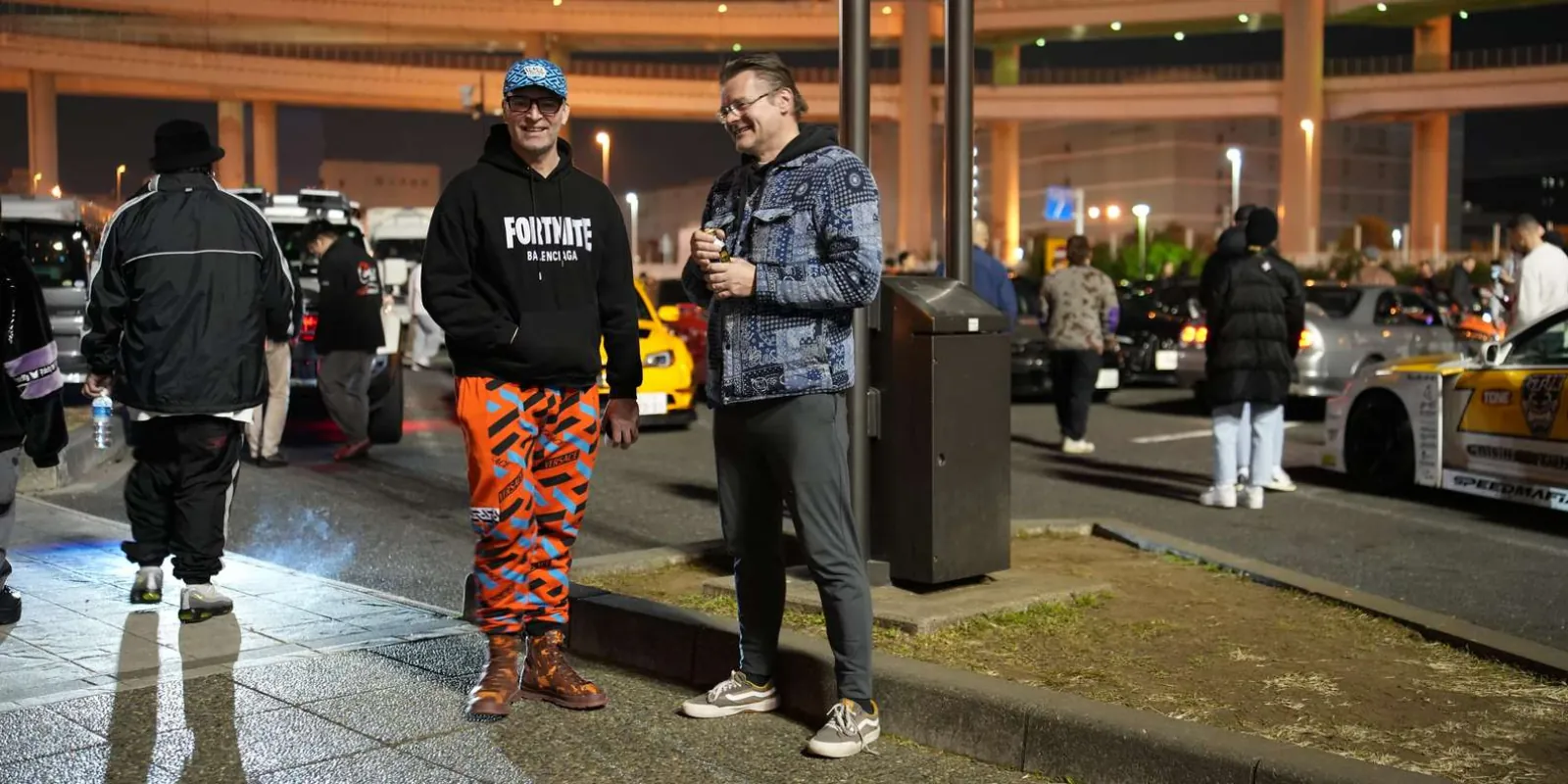
On a strong Friday or Saturday evening it can attract Skyline GT-Rs, R35 GT-Rs, RX-7s, Supras, Silvias, Evos, NSXs, kei cars and supercars, all in the same lot. It’s not an organised show and there’s no guaranteed meet — but its sheer capacity allows a scale that smaller parking areas simply cannot match, and that scale is the reason it became internationally famous.
The catch is access: you need a vehicle arriving via the correct Shuto Expressway route, and there’s no pedestrian entrance from the surrounding Daikoku-futo area.
If you’re not driving, the Daikoku JDM Car Meet & Night Car Culture Tour is the option most focused on the meet itself — 4.8/5 from 702 reviews, from $107. For a tuned-car ride out rather than a transfer, the Tokyo JDM Tour: Daikoku PA, Skyline GT-R & RX-7 runs 4.8/5 from 1,158 reviews, from $121. Our full background piece on what Daikoku Parking Area is covers how a rest stop became the scene’s unofficial headquarters.
2. Tatsumi PA — smaller and more transient
Tatsumi is famous from older Tokyo night photography and Wangan Midnight culture, but it is tiny compared with Daikoku.
Tatsumi No.1 has only around 29 standard-car spaces. That number reframes the whole experience: what happens there is much closer to
cars arrive → stop briefly → leave
than a large static gathering. There are also two Tatsumi parking areas, reached from different directions, which catches out visitors who assume there’s one place to aim for.
Visit if you already have a rental car, if your JDM tour happens to pass it, or if the Wangan Midnight side of Tokyo’s car culture is specifically what draws you. Do not choose it over Daikoku for a first car-meet night.
One honest note on booking: only one guided product currently includes Tatsumi at all — the JDM Car Meet, Autobacs & Daikoku Parking private tour, which stops at Tatsumi PA for skyline views before continuing to Daikoku. It’s a genuine match for the itinerary, but it currently holds just 4.1/5 from 9 reviews and starts from $301, which is a weak record and a high price next to the mainstream Daikoku tours. We’d book it only if Tatsumi specifically is the reason you’re going.
3. A-PIT Autobacs Shinonome — easiest car-culture stop
A-PIT is not a guaranteed meet. It’s a major automotive store where enthusiasts shop and service cars — wheels, tyres, tuning parts, detailing products and accessories — with interesting customer cars regularly appearing outside.
Its major advantage is that it is easy to reach without a car, which makes it the strongest daytime stop to pair with an evening Daikoku tour. If you only have one car-focused day in Tokyo, A-PIT in the afternoon and Daikoku after dark is close to the ideal shape.
Several tours build it into the route rather than leaving it to you. The Daikoku PA JDM Night Drive in a Skyline R34 or Evo X includes A-PIT at 4.9/5 from 161 reviews, from $125, and the Daikoku PA Car Meet & Speed Highway Run pairs it with Tokyo Tower and Rainbow Bridge at 4.8/5 from 178 reviews, from $125.
4. Umihotaru PA — scenic, not reliably a JDM meet
Umihotaru sits on the Tokyo Bay Aqua-Line and is one of Japan’s most unusual motorway service areas — an artificial island in the middle of the bay, with views, food, large parking decks and a genuinely dramatic road-trip setting.
Car groups do stop there, but we would not treat it as a guaranteed alternative to Daikoku. Its more useful role is as the standard fallback when Daikoku is closed or restricted, which is exactly how the tours that name it use it.
If Umihotaru appeals in its own right, the Daikoku or Umihotaru Tour in a Silvia S15, GR86 or 370Z lets it be the destination rather than the plan B — from $49, though at 4.5/5 from 85 reviews it’s the weakest-rated option we’d still put in front of you. The Private JDM Car Meetup Tour with Hotel Pickup names Umihotaru as its explicit fallback and rates 4.9/5 from 412 reviews, from $105.
5. Odaiba — useful when an event is happening
Odaiba has hosted a great many automotive events and gatherings over the years, but it is not one permanent nightly car meet.
Check what’s on during your dates. Outside of an actual event, treat car sightings there as opportunistic rather than planned. It does work well as a waterfront stop inside a wider night — the Fast & Furious Tokyo Drift III Experience takes in the Odaiba waterfront alongside Daikoku and A-PIT, at 4.8/5 from 5,303 reviews, from $123, which makes it the most-reviewed JDM night in the city by a distance.
6. Shibuya and Roppongi — street spotting only
You can see extraordinary cars in central Tokyo. You can also see nothing unusual for hours. Both are normal.
Do not stand at Shibuya Crossing expecting an R34 convoy because you saw one in a video. What these districts are genuinely good for is the look of Tokyo car culture at night — neon, traffic, the crossing itself — which is why several tours finish there rather than starting there. The Daikoku JDM Car Meet & Night Car Culture Tour includes a Shibuya leg for exactly this reason.
7. Hakone — driving culture rather than a meet
Hakone is not a fixed car-meet venue at all. Its appeal is weekend enthusiast driving — mountain roads, switchbacks, and the kind of Sunday-morning car culture that has nothing to do with parking areas.
For someone with a rental car, this can be a more meaningful look at Japanese car culture than chasing another car park. If you’d rather be driven, the Private JDM Sports Car Tour to Mt Fuji and Hakone lets you choose the car and adds an optional onsen stop — 5.0/5, but from only 18 reviews, and from $381. The Mt. Fuji Skyline JDM Car Driving Tour covers the same road for 5.0/5 from 8 reviews, from $251. Be clear on what both are, though: despite the names and the second-person marketing copy, neither hands you the keys — your guide brings the car and does the driving. Genuine self-drive means a specialist rental company, not a tour listing.
Daikoku vs Tatsumi
For almost every first-time visitor, Daikoku wins.
Daikoku offers more cars, more variety, more space and better odds on any given night. Tatsumi offers Tokyo expressway atmosphere, smaller groups and a genuinely different feeling — but it’s a stop on a drive rather than a destination in itself.
The honest framing is that these two aren’t competitors. If you have one evening, that evening belongs to Daikoku. If you have a car and a whole night’s driving ahead of you, Tatsumi is a worthwhile pause on the way.
Are Tokyo car meets organised?
Some are. Most of the locations tourists talk about are not.
The Daikoku and Tatsumi gatherings are informal — nobody books them, publishes them or runs them. Other meets genuinely are organised: owner-club gatherings, shop events, model-specific meets and proper shows all exist and all have dates.
Don’t assume every “Tokyo car meet” has a timetable or a ticket. If a page promises you a specific date and a specific lineup at Daikoku, it’s describing something that doesn’t exist.
Best night for Tokyo car meets
For Daikoku: Friday and Saturday evening.
For the other locations, it depends far more on the specific place. A-PIT keeps store hours. Hakone is a daytime, dry-weather proposition. Odaiba depends entirely on whether an event is running.
Across all of them, dry weather is one of the single most important variables — owners of rare or carefully detailed cars are far less likely to bring them out in the rain, and that alone can be the difference between a memorable night and an empty car park. Our best time to visit Daikoku PA guide breaks the timing down day by day.
Can you visit without a tour?
Yes, if you have a car and legal driving documents.
Without a vehicle, the split is clean:
- A-PIT Autobacs and showrooms are easy — train, walk, done.
- Daikoku and Tatsumi are not — both sit inside the expressway network with no pedestrian access.
That’s the whole reason the tour market exists here. Our JDM tour vs. renting a car in Tokyo guide works through the licence requirements and the true cost of doing it yourself.
Can you rent a JDM car and go yourself?
Yes. If you can drive legally in Japan, a self-planned night is entirely feasible, and it gives you something no tour can: your own schedule.
A straightforward evening route might be:
Tokyo → Tatsumi → Wangan → Daikoku → Tokyo
Or, with a full day available:
Tokyo → Hakone → Yokohama → Daikoku → Tokyo
Both assume you’re comfortable with Japanese expressway signage, tolls, an ETC card and Tokyo’s junction layouts after dark. Neither is a good first-ever drive in Japan.
Car-meet etiquette
You’re entering a space used primarily by Japanese owners and local enthusiasts, not a tourist attraction built for visitors. The rules are short:
- Never touch a car.
- Don’t lean on cars.
- Don’t block owners who are trying to leave.
- Don’t demand revving.
- Don’t encourage racing.
- Stay out of traffic lanes.
- Respect people when filming, especially if faces are prominent.
Police closures hurt the local community far more than they inconvenience a visitor passing through once. The etiquette isn’t politeness for its own sake — it’s what keeps the meets happening at all.
What happens if Daikoku closes?
Have alternatives ready. A good JDM evening should not collapse because one parking area is unavailable.
Reasonable alternatives include another parking area where appropriate, A-PIT Autobacs, a longer Tokyo night drive, a Yokohama leg, or whatever automotive gathering is running during your dates. Umihotaru PA is the fallback that comes up most often in tour itineraries, and it’s the one to ask about specifically when you book.
Best first-timer itineraries
Without a rental car
A-PIT in the afternoon → JDM tour pickup → Daikoku in the evening
This is the highest-value shape for a single car-focused day in Tokyo, and it needs no driving licence at all.
With a rental
A proper daytime drive → Yokohama → Daikoku
Use the daylight for roads rather than car parks, then finish at the meet.
Repeat visitor
Tokyo expressways → Tatsumi → Wangan → Daikoku
The night-drive version, for people who already know what Daikoku looks like and want the roads between the stops to be the point.
Our recommendation
If you have only one evening, prioritise Daikoku PA. Nothing else in the Tokyo area offers the same combination of scale, variety and atmosphere, and everything else on this list is a supporting act by comparison.
If you have a full car-focused day, combine it with A-PIT, a JDM car, Tokyo’s expressways, and either Hakone or Yokohama depending on how much driving you want.
The best way to understand Tokyo car culture is not to collect as many parking-area names as possible. It’s to experience the cars, the roads, and the places where enthusiasts actually spend their time — which is usually three locations done properly rather than seven done in a hurry.
Continue planning
Once you’ve decided which locations matter to you, the best Daikoku PA tours from Tokyo compares the tour types that get you to the main event, and our best JDM tours in Tokyo ranking lines up every option on this site side by side. For the Daikoku detail itself, how to visit the Daikoku PA car meet covers access, timing and etiquette in full.
Frequently asked questions
Where is the main car meet in Tokyo? There isn’t one inside Tokyo itself. The biggest informal gathering is at Daikoku PA, which is actually in Yokohama, on the Bayshore Route. Tatsumi PA is the notable one within Tokyo, but it’s far smaller and much more transient.
Can you see JDM cars in Tokyo without a car? Yes, but your options narrow considerably. A-PIT Autobacs Shinonome and manufacturer showrooms are easy to reach by train. Daikoku PA and Tatsumi PA sit inside the expressway network with no pedestrian access, so those need either your own vehicle or a tour.
Is Tatsumi PA worth visiting instead of Daikoku? Not for a first visit. Tatsumi No.1 has only around 29 standard-car spaces, so cars tend to stop briefly and move on rather than gather. It’s a good stop on a night drive if you already have a car, not a substitute for Daikoku.
Are Tokyo car meets scheduled events? Mostly not. The Daikoku and Tatsumi gatherings are entirely informal with no organiser and no timetable. Owner-club meets, shop events and proper car shows do have dates, but they’re separate from the parking-area scene.
What night are Tokyo car meets busiest? Friday and Saturday evenings for Daikoku. Dry weather matters at least as much as the day of the week, because owners of rare or heavily detailed cars are much less likely to come out in the rain.
Is A-PIT Autobacs a car meet? No, it’s a large automotive store rather than a gathering. Enthusiast cars come and go while owners shop, which makes it good for casual spotting, but nobody organises a meet there. Its real advantage is that you can reach it by train.
Ready to plan the night itself? Compare the Tokyo JDM tours that run out to Daikoku PA and check live availability for your dates.
Ride Tokyo's JDM Scene Tonight
Join 5,300+ riders who rated this experience 4.8/5. A seat in a real tuned JDM car, entry to Daikoku PA's legendary meet, and a guide who lives the scene — free hotel drop-off included.
Check Availability & Book